The Menara Gardens represent one of Marrakech's oldest and most serene public spaces, established in the 12th century by the Almohad dynasty. The name "Menara" comes from the Arabic word for lighthouse or minaret, referring to the iconic green-tiled pavilion that sits beside a vast rectangular reflecting pool. This garden complex, covering nearly 100 hectares of olive groves, was designed not just for beauty but as a sophisticated agricultural and irrigation project, with the pool serving as a reservoir for watering the surrounding orchards through an ancient khettara (underground canal) system that still functions today.
Watergarden Feelings
Suite Menara
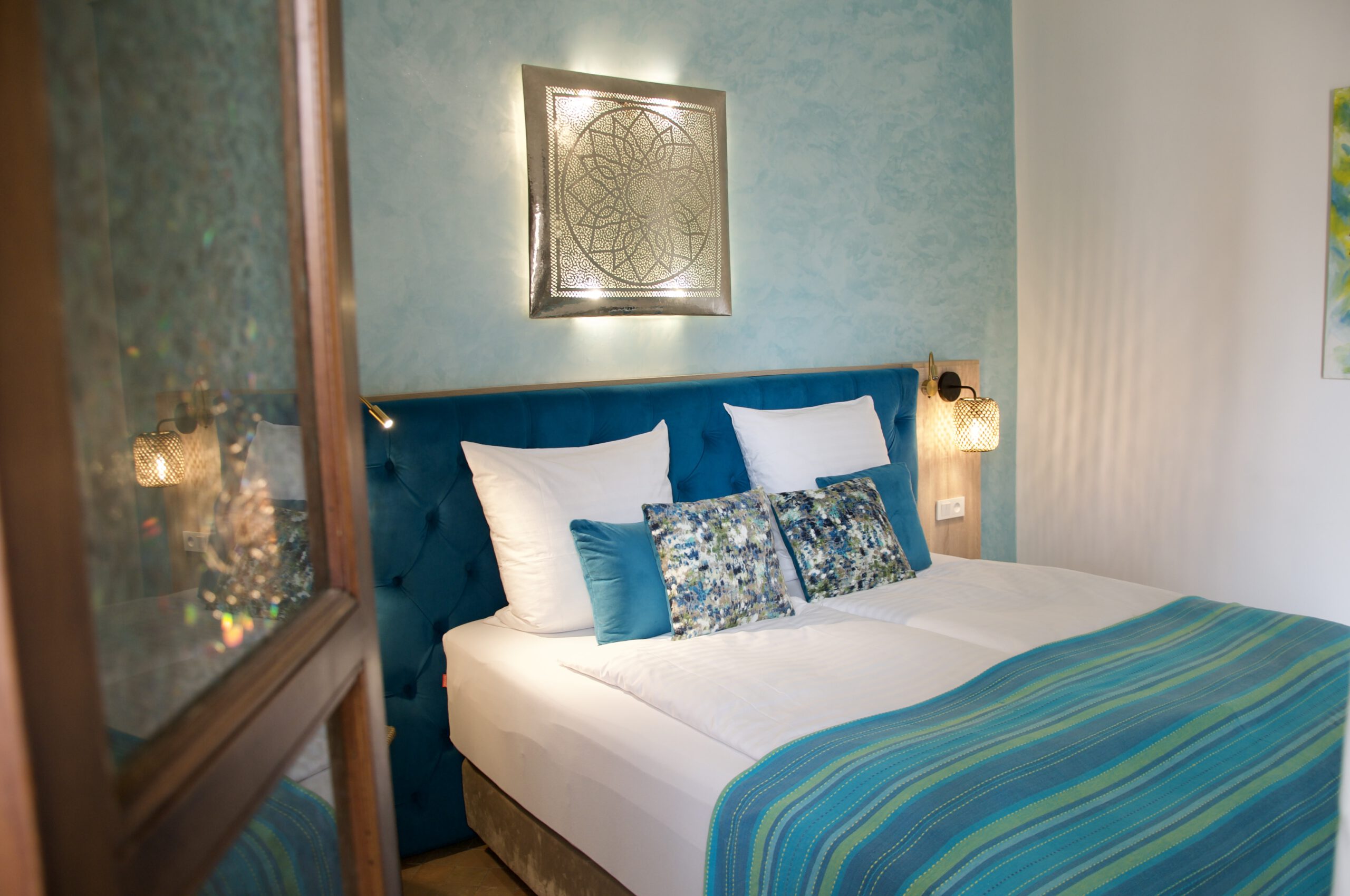
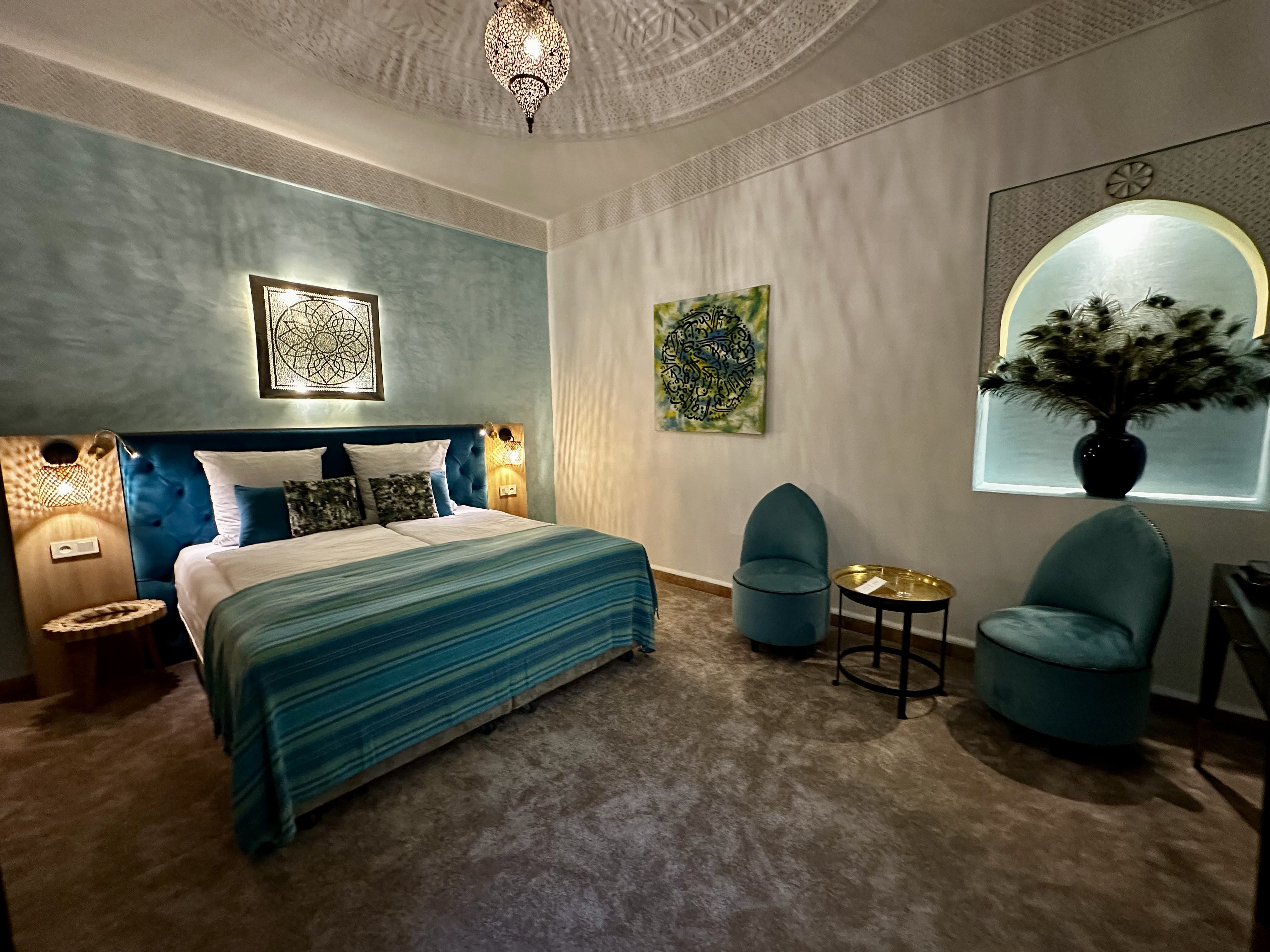
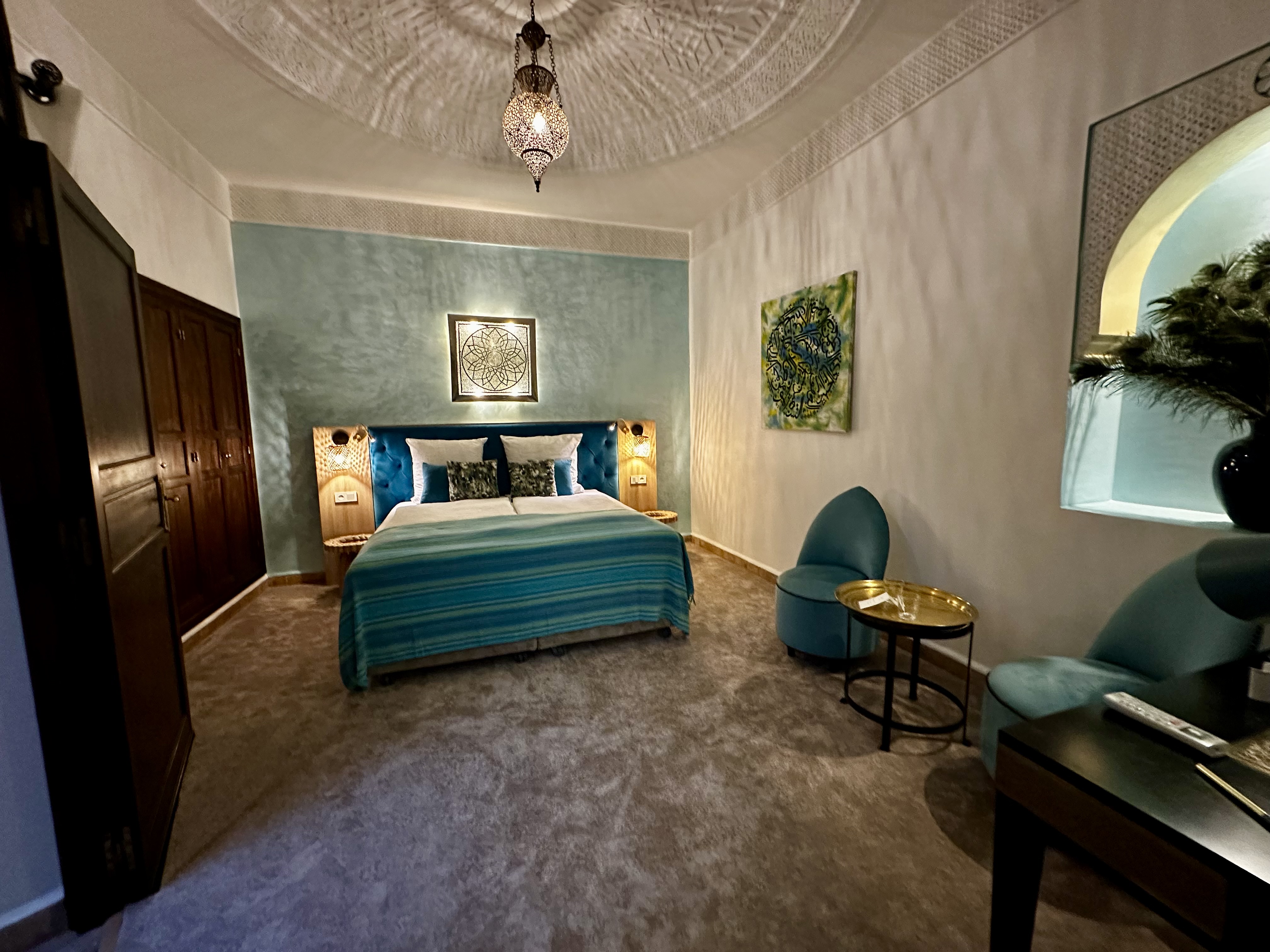
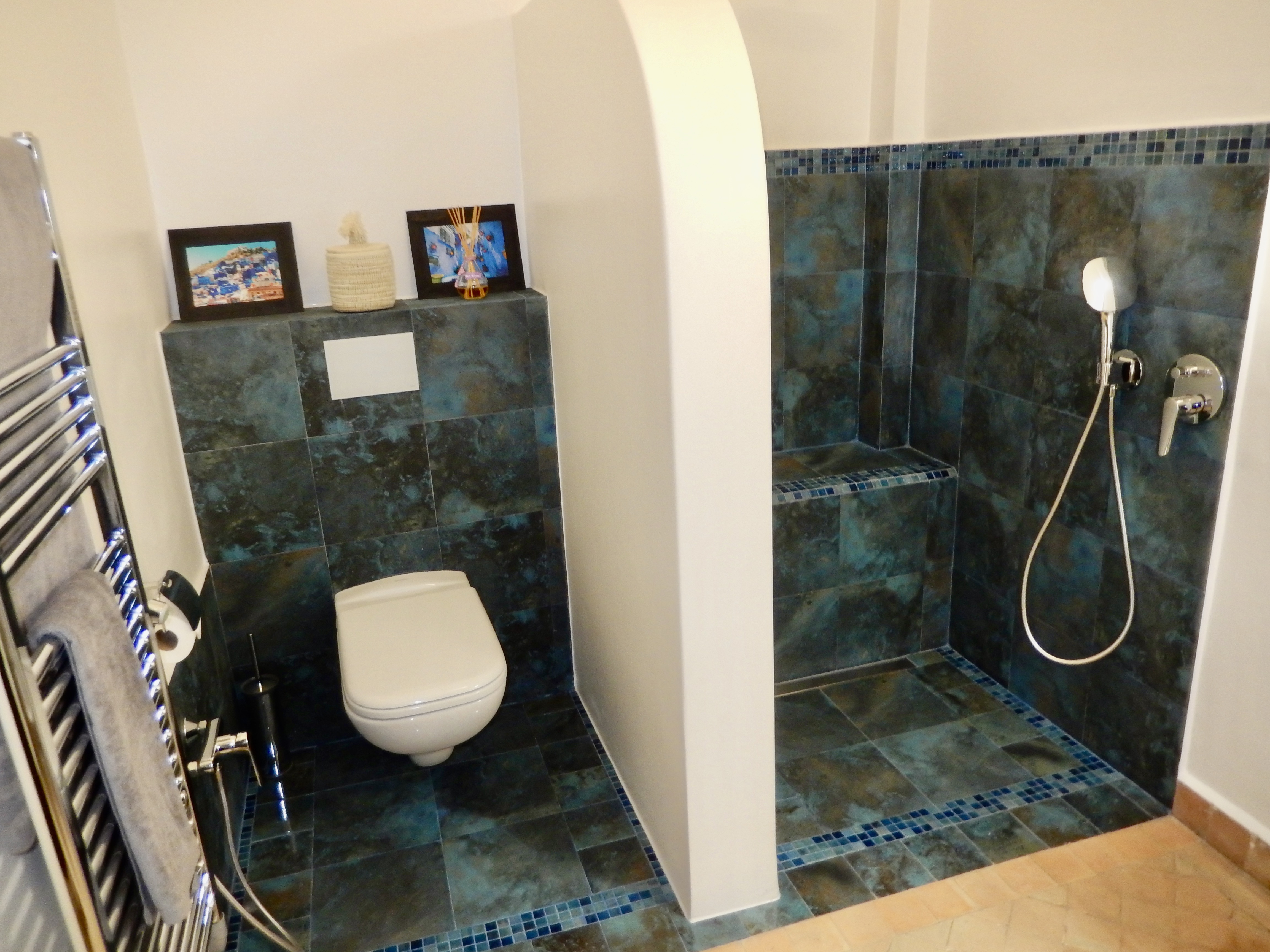
We have designed this special suite, with a total size of 26 m2, based on the idea of deep waters. Turquoise and blue tones give the spacious rooms a touch of lakescape, just like in the Menara Gardens with the view of the High Atlas. A King Size Bed or a Twin Bed setup make your stay absolutely comfortable. The suite is designed for couples and traveling with a friend or family member who prefer to sleep in a single bed. But not only that.
The special arrangement of the furniture and especially the ultra-modern bathroom have been equipped according to German DIN standards. A shower with a seat, an appropriate toilet with automatic flush and wheelchair-friendly heights and widths in all areas have been taken into account. This suite has a special charm of which we are very proud. We have managed to combine modern and classic design and still meet all the necessary needs for the elderly or people with disabilities.
Check-In
-
Check-in from 15:00 AM - anytime
-
Early check-in subject to availability
Check-Out
-
Check-out at 11:00 AM
Attentive Service at Every Step
Our guests are immersed in first-class service from the very beginning. From your initial inquiry, you will receive clear, transparent, and helpful information, and our Concierge Service will be delighted to assist you at any time. We kindly recommend paying close attention to our email communication, which will provide you with important information regarding your journey.
Room Occupancy
The suite features a comfortable king-size bed that can be separated into twin beds, making it ideal for friends traveling together. The room can accommodate up to three guests.
- Children aged 0–4 years stay free of charge.
- Children aged 5–11 years are charged EUR 20 per night.
Amenities
-
1 King Size /-Twin Bed
-
Max 3 Persons
-
Children up to 4 years included
-
Sitting Area
-
Reverse AC
-
Bathroom Heating
-
Special equipped bathroom
-
For older and handicapped persons
-
Hairdryer
-
Bathrobes and Slippers
-
Amenities
-
26 m2 Total Size
Explore our riad's beautiful spaces and amenities
Gallery
Discover the history and culture behind our riad
Our Story